The Future Of Self-Driving Cars: How AI Makes Decisions For Safer Roads
Author:Mike Fakunle
Released:December 2, 2025
Self-driving cars aren’t a sci-fi idea anymore. They’re already on real roads, moving people and goods every day. What really determines whether they work isn’t how fast they go or how comfortable they feel; it’s how they react in risky situations.
On the road, decisions happen in a split second. A child suddenly running out, a driver changing lanes without warning, a car stopping too fast. AI systems now have to notice these moments and respond immediately. That’s a big shift from the past, when only humans made those calls.
How AI Sees the Road in Real Time
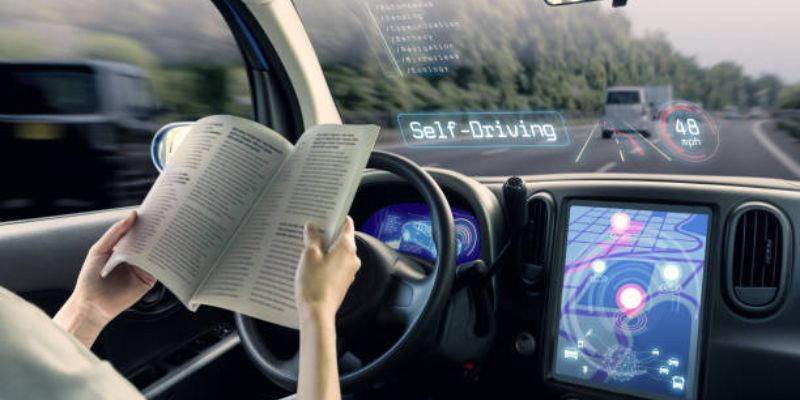
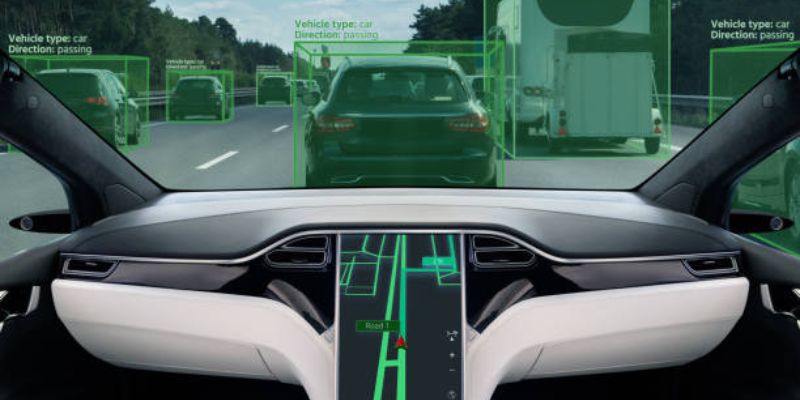
Self-driving cars rely on artificial intelligence to take in far more information than a human driver can process at once. Cameras, radar, and lidar constantly scan the road from multiple angles. Together, these sensors collect massive amounts of data every day, far beyond what a person could track in real time.
Each sensor plays a different role. Cameras read lane markings, traffic lights, and signs. Radar measures distance and speed, even in rain or fog. Lidar builds a rough 3D map of nearby cars, people, and objects. When one sensor struggles, another often fills the gap.
This layered approach matters most in low-visibility situations. The U.S. NHTSA noted in its automated vehicle safety update that combining sensors helps reduce blind spots at night and in bad weather.
That is why autonomous systems often slow down earlier than human drivers. They are reacting to signals most people never notice.
How AI Predicts What Other Road Users Will Do
Driving safely is not just about spotting objects. It is about guessing what happens next. Artificial intelligence studies patterns in how cars drift, how pedestrians pause at curbs, and how cyclists adjust their balance before turning.
These predictions update many times per second. If a vehicle ahead taps the brakes, the system estimates whether it is stopping fully, turning, or reacting to something hidden. Each possibility is weighed, not guessed.
Research from MIT and Stanford shows that prediction models reduce hard braking by anticipating movement instead of reacting late.
For passengers, this usually feels like smoother driving. Fewer sudden stops. Less swerving. More space is left around unpredictable road users.
How AI Makes Split-Second Driving Decisions
Once predictions are made, artificial intelligence must choose what to do. This decision layer balances safety, comfort, and traffic rules in real time. Thousands of possible actions are evaluated before one is selected.
If a ball rolls into the street, the system does not wait to see a child. It assumes someone may follow and slow down early. Humans often react after the danger appears. Machines act on risk.
Human reaction time averages about 1.5 seconds. Autonomous systems respond in milliseconds. Studies referenced by the IIHS in 2026 safety briefings show that earlier responses are a major reason automated systems reduce low-speed collisions.
This does not mean self-driving cars are perfect. But their strength lies in consistency. They do not get distracted, tired, or impatient when decisions need to be made fast.
How AI Learns From Millions of Miles Driven
1. Data Collection From Real Roads
Artificial intelligence improves by seeing the real world over and over again. Every mile driven by a self-driving car creates data about traffic, weather, road design, and human behavior. This data is labeled and reviewed so systems can learn what went right or wrong.
By 2025, U.S. autonomous test fleets had logged tens of millions of miles on public roads, based on reporting from the U.S. DOT.
What matters is not just distance, but variety. Urban traffic, rural highways, construction zones, and unpredictable drivers all help models learn faster than controlled tests ever could.
2. Simulation-Based Training
Some dangerous situations rarely happen in real life. That is where simulation comes in. In virtual environments, systems can practice crashes, near misses, and extreme weather without putting anyone at risk.
Researchers at Waymo and NVIDIA reported that a single day of large-scale simulation can equal years of human driving exposure.
This allows engineers to stress-test decisions and fix weaknesses before cars return to public roads.
3. Continuous Model Updates
Self-driving systems do not learn in isolation. When one vehicle encounters a new situation, that lesson can be shared across the fleet through software updates.
Unlike human drivers, who rely only on personal experience, autonomous vehicles improve collectively. Experts from IIHS noted in 2026 that this shared learning model helps safety improvements spread much faster across cities.
For everyday users, this means performance can improve quietly over time, even if your local roads never change.
How AI Manages Ethical Trade-Offs on the Road
1. Risk Minimization Logic
When something goes wrong on the road, AI is not trying to assign blame. Its goal is to reduce harm as much as possible. The system uses speed, distance, and object size to estimate what action leads to the least injury.
This logic is based on basic physics, not moral opinions. For example, slowing down early usually lowers injury risk more than sudden steering at the last second. Safety researchers note that predictable actions tend to reduce severe outcomes.
2. Rule-Based Constraints
Autonomous vehicles follow fixed rules that do not change under pressure. They stop at red lights, obey speed limits, and respect right of way, even when breaking a rule might seem faster.
These constraints matter because consistency prevents chaos. Unlike humans, AI does not rush, panic, or take shortcuts. According to guidance updated by NHTSA in 2025, rule consistency is a core requirement for safe deployment.
3. Human Oversight in Policy Design
Ethical boundaries are set by people, not machines. Engineers, regulators, and safety boards decide what trade-offs are allowed long before a car hits the road.
AI only follows these instructions. It does not invent values or make moral judgments on its own.
How AI Reduces Human Driving Errors
Human error remains the leading cause of crashes worldwide. The World Health Organization reports that distraction, fatigue, and impaired driving account for over 90 percent of traffic accidents.
Self-driving systems do not get tired or distracted. They monitor all directions at once and react in milliseconds. In the U.S., more than 40,000 people die on the roads each year, according to NHTSA 2025 data.
Even partial automation that prevents common mistakes like drifting or delayed braking could save thousands of lives annually.
How AI Adapts to Local Driving Cultures
Driving habits are not the same everywhere. In some cities, drivers merge early and leave space. In others, late merging and close following are normal. Self-driving systems learn these differences from local driving data.
Autonomous vehicles adjust things like following distance, acceleration, and lane changes based on what works in each area. In California suburbs, cars tend to drive more cautiously. In denser cities, they learn to be more assertive without being risky.
Developers call this localization. It helps cars blend into traffic instead of confusing human drivers. Adapting to local patterns improves safety and reduces unnecessary braking.
The key point is flexibility. Safer roads do not require one global driving style. They require systems that understand local habits and respond smoothly.
How AI Communicates With Other Vehicles
Self-driving cars also rely on communication, not just sensors. Vehicle-to-vehicle systems let cars share warnings about hazards ahead.
If one car detects black ice, debris, or sudden braking, nearby vehicles can receive alerts within seconds. This gives drivers and automated systems more time to react.
The National Highway Traffic Safety Administration reports that connected vehicle technology could help prevent or reduce up to 80 percent of crashes involving unimpaired drivers. This finding continues to guide deployment plans in 2025 and 2026.
As more vehicles become connected, traffic becomes less reactive and more coordinated. Fewer surprises mean fewer chain collisions and smoother traffic flow overall.
How AI Is Tested Before Public Deployment
1. Closed-Course Testing
Before self-driving cars ever enter city streets, they spend years on closed test tracks. Engineers repeatedly test emergency braking, sudden obstacles, poor lighting, and sensor failures.
These tracks allow teams to push systems to failure safely. According to testing guidance updated by NHTSA in 2025, controlled environments remain a required step before any public use.
2. Limited Public Pilots
After track testing, cars move to limited public pilots. Cities approve specific routes, speeds, and operating hours. Performance is monitored closely, and trained safety drivers stay ready to take control.
States like California and Arizona publish public pilot data each year. In 2025, California reported millions of autonomous miles driven under permit, with disengagement rates steadily declining.
3. Regulatory Review and Reporting
Manufacturers must submit regular reports on crashes, system disengagements, and software updates. These reports help regulators spot patterns early.
Public reporting also gives communities visibility into real-world performance, not marketing claims.
Why Safer Roads Depend on Gradual Adoption
Self-driving cars will not replace human drivers all at once. The hardest stage is mixed traffic, where people and autonomous vehicles share the road.
Gradual adoption lowers risk. Delivery fleets, ride-hailing services, and highway freight are early use cases because routes are predictable and easier to monitor.
The U.S. Department of Transportation notes in its 2026 outlook that controlled deployments reduce accidents during early rollout phases.
Each successful phase improves systems and builds public confidence. Slow progress may feel frustrating, but it is one of the safest ways forward.
Building Trust in the Age of Autonomous Vehicles
People trust self-driving cars when they understand what the car is doing and why. It’s not enough to say the system works. Drivers and passengers want clear explanations, real safety records, and predictable behavior on the road.
Sharing crash reports, test results, and system limits helps. When cars behave the same way in similar situations, people feel more comfortable around them.
Trust also grows through everyday exposure. Seeing autonomous vehicles handle normal traffic, bad weather, and busy streets without drama makes a difference. Confidence comes from experience, not promises.
Safer roads depend as much on consistency and openness as on technology itself.
Don't Miss

Easy AI Tools to Create Videos and Music Without Experience

Better Video Quality Made Easy: Tips and Tools for Creators

The Dark Side Of AI: Privacy Risks You Should Know Today

10 Beginner-Friendly AI Tools Anyone Can Use In 2026

AI-Powered Health Trackers: 7 Ways They Interpret Your Data and Explain Your Body